Should Your Knees Go Over Your Toes When Squatting?
Happy Monday folks! Today is mythbuster Monday….we need to tackle a major myth in the fitness industry - whether your knees should go over your toes when you squat.
Where did this myth originate? Forty years ago, a study published by Duke University in 1978 (McLaughlin, 1978)….that’s 40 YEARS AGO FOLKS… demonstrated an increase in shearing force at the knee joint when participants knees were allowed to travel passed their toes when squatting. From there it became widespread knowledge that squatting with knees over toes leads to increased strain on the knee joints and should be avoided at all costs. In all fairness, it does sound pretty scary….shearing force on your knee?! No thank you.
Many moons later in 2003, the University of Memphis (Fry, 2003) put out a study confirming the results of the Duke study. When participants allowed their knees to go passed their toes while squatting, shear force at the knee increased by 28%! Interestingly, when participants tried keeping their shins vertical to protect the knees, hip and low back stress increased by nearly 1000%! Crikey.
Strangely, these findings never made their way into mainstream training courses. Instead, the recommendation to keep the knees behind the toes stuck and is still to this day found in many person training textbooks and certification courses.
So the question remains, should your knees go passed your toes in a squat? YES. It is virtually impossible to keep your shins perfectly vertical while distributing force between your knees, hips, and low back as we should aim to do in a proper squat. The challenge only gets more intense the deeper you try to squat. Fun challenge, stand up right now and try to squat “ass-to-grass” without letting your knees travel passed your toes. If you accomplished this, you need to quit your job and run away with the circus IMMEDIATELY, you have a bright future ahead of you. If, like most of us, you found this task impossible…..I hope it was a real ‘aha’ moment for you.
But what if you don’t squat ass-to-grass you ask? Great question. A squat is not a squat is not a squat…..there are two basic movement patterns for squatting. The “high-bar” squat (Fig 1) and the “low-bar” (Fig 2) squat. High-bar squats are characterized by a higher bar placement (didn’t see that coming did you?) and a depth beyond parallel - often so deep the hamstrings sit directly on the calves. In a high-bar or “olympic” style squat, the knees most certainly travel over the toes and the quadriceps take centre stage for lifting you back up out of the hole. Low bar squats are seen in powerlifting and are characterized by a greater hip hinge and a depth at or near parallel. Low back and hips take much of the force to raise you back up to a standing position - which isn’t inherently bad! Different squats for different training purposes.
Fig 1 - “High-Bar” or “Olympic” Squat
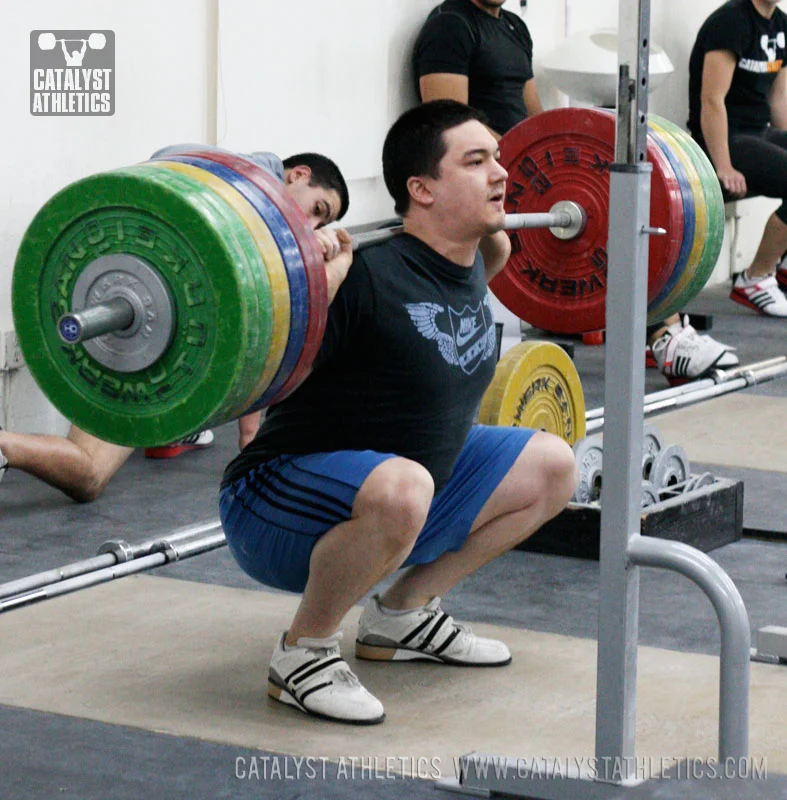
Full image credit to Catalyst Athletics www.catalystathletics.com
Fig 2 - “Low-Bar” or “Power-lifting” Squat
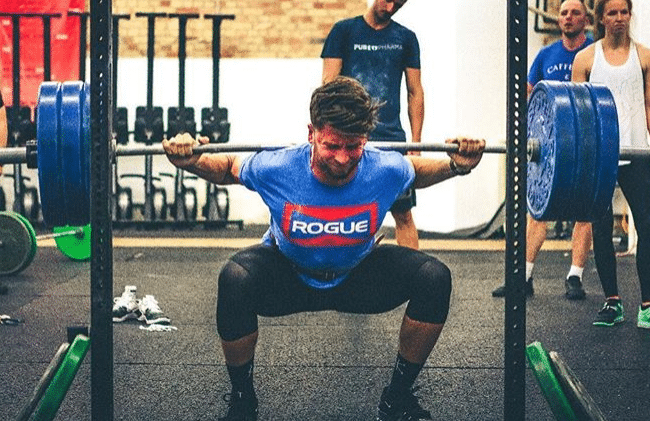
Full image credit to Bar Bend www.barbend.com
Should you high bar or low bar squat? Great question, it depends…..it depends on your training goals, your anatomy, your mobility, and injury history. There is no better or worse way to squat, but squatting should be a natural motion that we adjust to our own needs. By adjusting the width of your stance, placement of your hands, turn out of your feet, and depth you squat to you can see massive changes in not only your strength but your confidence in doing squats!
But what about lunges? I’m glad you asked. The same rule applies for lunges in that the more your knee drifts passed your toes (Fig 3), the more you will recruit your quadriceps vs keeping the shin perfectly vertical (Fig 4) which will emphasize your glutes & hamstrings. Play around with your foot placement to find the width of lunge that feels best for you. You want to avoid having your feet so far apart that the stretch in your hip flexor makes you tip forward. Your chest should remain upright and eyes forward when performing a lunge.
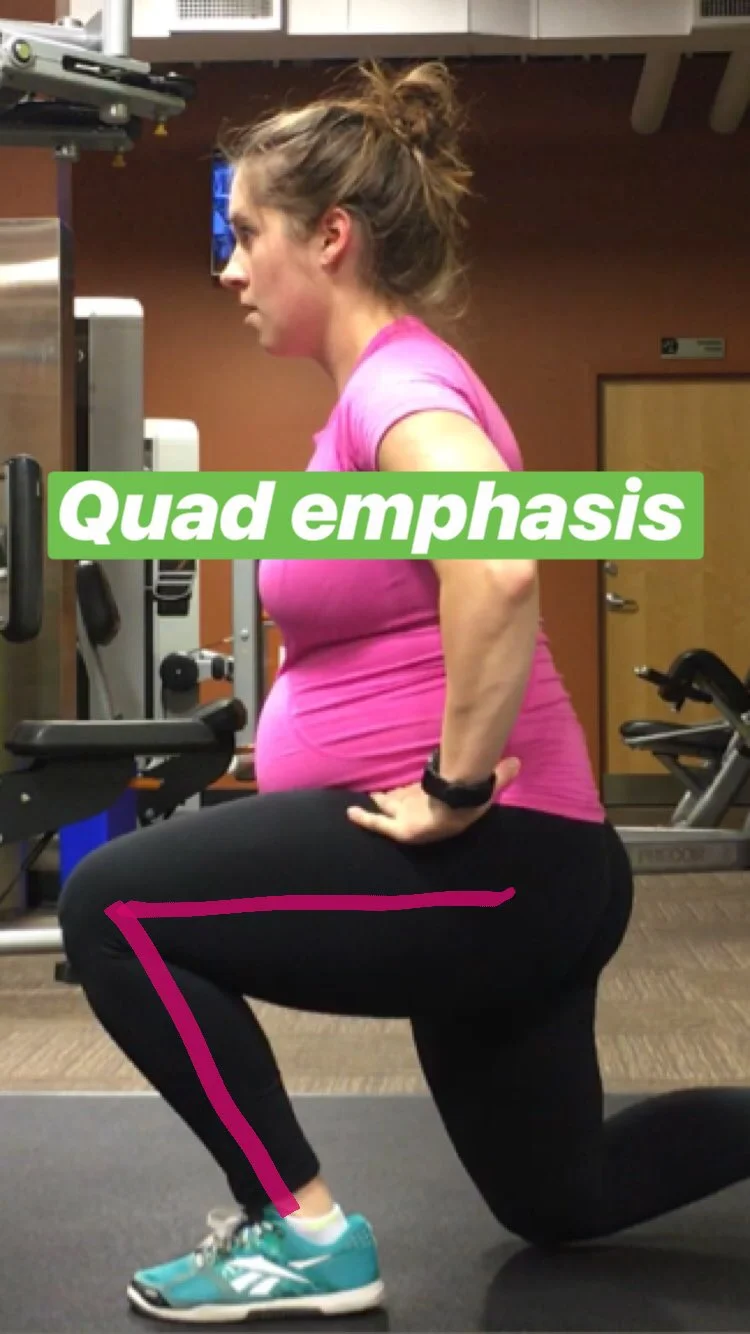
Fig 3
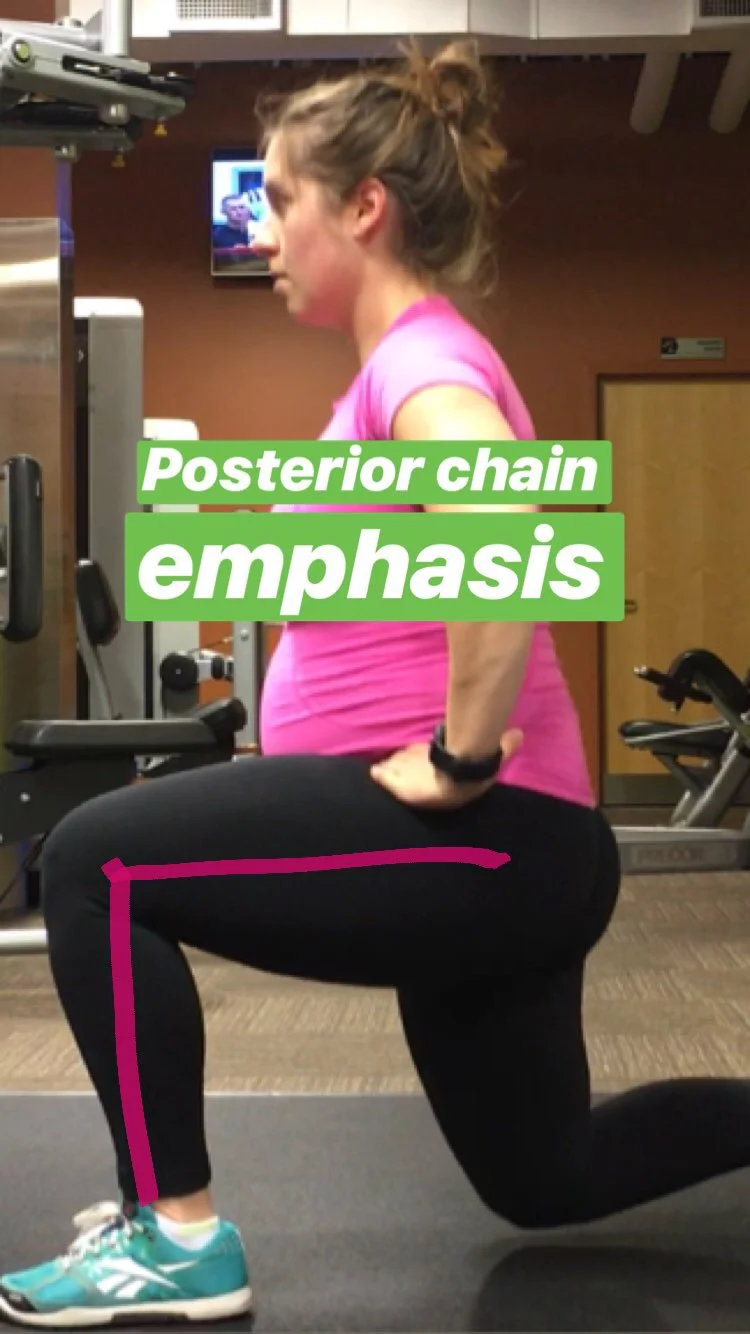
Fig 4
Most of the clients I work with have never squatted before or have attempted it a few times but not really found their groove with it. Squatting should be a mainstay in your strength programming, if you’re unsure how to get started or would like something personalized to make sure you are on the right track send me a message via email (coachpeachey@gmail.com) or on instagram and we can work together to help you achieve your goals.
Happy Squatting!
Coach P
References
McLaughlin, T., Lardner, T., & Dillman, C. (1978, May). Kinetics of the parallel squat. Research Quarterly, 49(2), 175-189
Fry, AC., Smith, JC, S., & Schilling, BK. (2003, November). Effect of knee position on hip and knee torques during the barbell squat. Journal Of Strength And Conditioning Research / National Strength & Conditioning Association, 17(4), 629-633.